

Burnout is more common in today’s society than ever. As a matter of fact, 86% of people working from home report feeling symptoms of burnout, turning what should be a great experience into a nightmare.
As I’ve mentioned in some of my previous blog posts I have personal experience with burnout. Especially when I first started out as a freelancer.
So if you think you’re suffering from burnout, this is the guide for you. I’ll cover what causes burnout, recognizing the symptoms, and recovering from burnout.
What Causes Burnout?
This can be a complex question, there are usually a lot of factors that contribute to being burned out. First, let’s take a look at what burnout is and how it affects you.
By definition, burnout is a state of emotional, physical, and mental exhaustion. This state of exhaustion is caused by prolonged exposure to high-stress levels. It causes you to slowly lose your motivation and interest in your life and work.
When you’re getting close to being burned out you may notice feeling:
- Overwhelmed
- Emotionally Drained
- Exhaustion even after just waking up
- Every day is a bad day
If you notice yourself feeling like this it may be time to make some adjustments to your workload. If these red flags are ignored for too long you could suffer burnout and start to notice more severe symptoms.
Recognizing the Symptoms Of Burnout
If you ignore the red flags above burnout can affect your whole body. There are both physical and mental symptoms that you can experience some of these include:
- Lowered immune system response
- Frequent headaches
- Tension in your shoulders or neck
- Change in appetite or sleeping patterns
- Loss of motivation
- Sense of failure
- Imposter syndrome
- Feeling helpless
These are by no means the only symptoms of burnout. You also dont have to display every symptom to be suffering from burnout. No one knows your body like you do, be sure to note anything you feel is out of the ordinary.
If you do notice these symptoms it’s time to start taking some steps to get past your burnout.
Recovering from Burnout
When you’re suffering from burnout it can take a long time to recover. Some even believe it can take up to 5 years to fully recover. The road to recovery from burnout is not straightforward nor is it an easy one.
One of the first things you need to do is allow your body, and mind, to rest.
Getting the Rest You Need
If you work full-time, this can seem like an impossible task. However, it is possible with help of setting firm boundaries between your work life and home life, especially when you work from home.
The first step here is to make sure you’re getting enough sleep at night. When your schedule your day be sure to end your work day with plenty of time to unwind, relax and destress. Try taking a shower right before going to bed to help you settle in and get a good night’s sleep.
Aim for at least 8 hours of restful sleep per night, and up to 10 for severe burnout. It can also be a good idea to take a nap during the day if you can. But if you can’t, be sure to schedule yourself plenty of breaks throughout the day and do something that takes your mind off of work like:
- Taking a coffee/tea break while watching a video
- Doing yoga
- Playing with pets
- Going for a walk
- Journaling
- Doodling
- Playing a game
- Reading a chapter in a book
These are just a few great ways to give yourself a mental break from the stress of working. Be sure to schedule yourself time to eat a proper lunch during the workday as well. Your nutrition will also play a big role in helping to recover from burnout.
Eating for Burnout Recovery
Your nutrition will play a vital role in helping boost your immune system. It can also help boost your overall mood, and increase your energy.
Try to increase your intake of these foods:
- Fresh fruits and vegetables
- Nuts
- Low-fat dairy
- Lean meats
- Whole grains
- Water
- Juices (no sugar added)
These foods can contribute to lowered moods, lack of energy, and even depression:
- Fried foods
- Processed foods (like microwavable meals and snacks)
- Fast food
- Sugary foods
- Sodas
- Alcohol
Reducing Stressors
Once youve started getting yourself enough rest and proper nutrition, it’s time to start evaluating your environment and workload. It’s important to really examine what’s causing your stress. Things you may need to consider include:
- Taking on too much of a workload
- Strains in relationships
- Your support system
- Mental health
- Being a “perfectionist”
Realizing what causes your stress takes patience, with yourself and with your progress. A bullet journal like this one, is a great way to keep track of your moods, stress levels, and more. It can make it easier to see where the majority of your stress is coming from and see what changes you need to make.
Regardless of what’s causing your stress, another big part of recovering from burnout includes being kind to yourself.
Take it Easy on Yourself
I’ll be the first to admit that im hard on myself when I feel like im not “doing enough”. But this isn’t productive, and does nothing but harm your mental health even more. When your recovering from burnout be sure to give yourself the same compassion you would give a loved one.
Taking a few moments each day to meditate or practice gratitude can help clear your mind of negativity. It can also help build positive habits that can help you avoid burnout in the future too.
Avoiding Burnout
There are steps that you can take in order to avoid burnout in the first place. These include the steps we’ve already talked about. But there are a few that I wanted to save for this section mainly because these are things that can build good daily habits.
These are important not just to avoid burnout but to help you with skills like:
- Time Management
- Organization
- Setting work/life boundaries
- Goal setting
Setting a Daily Schedule
Humans are creatures of habit, we naturally get stressed out when we dont know what’s going to happen next. That’s one of the biggest reasons why setting a schedule is one of the best ways to help avoid unnecessary stress.
For some of us, one daily schedule may not be possible. For example, if you work from home, take online college courses, and are raising a family. There are just not enough hours in the day to do everything.
However, making a general daily schedule can help out a lot. Like this one:
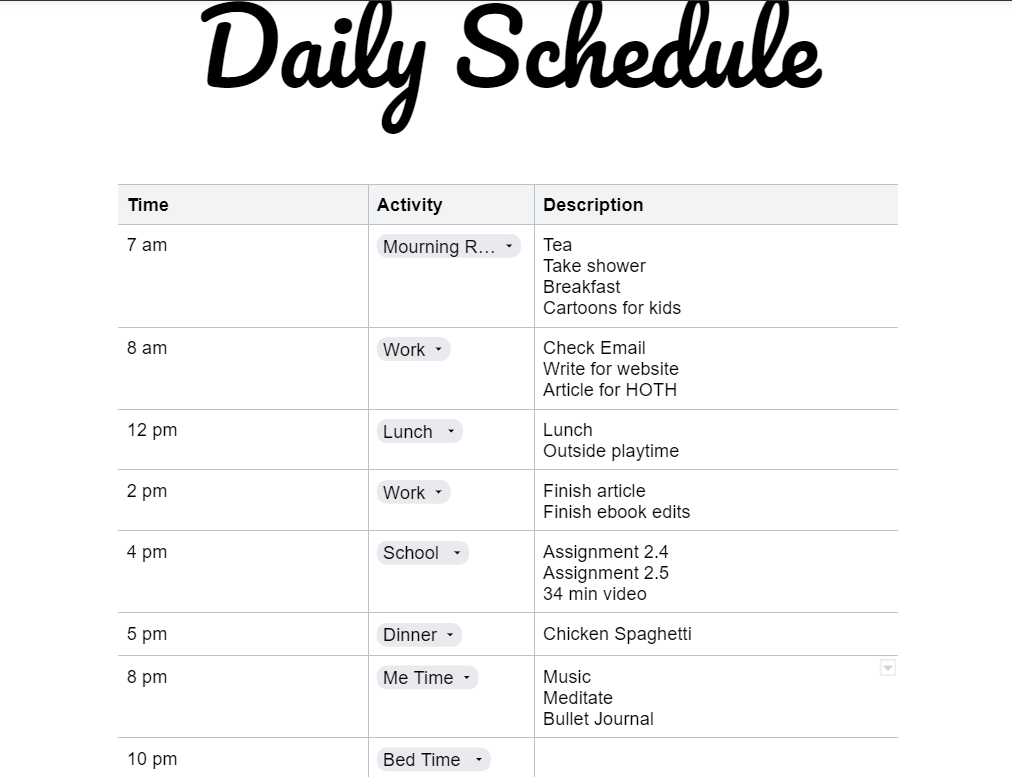
If you like my daily schedule snippet you can get your own customizable daily schedule here. This can help you get your day organized and minimize stress throughout the day. It also helps you set realistic daily goals and can improve your production.
I’ve included brief instructions on how to use this daily schedule, as well as how to further customize it to your exact needs. If you like this resource please consider following the blog so you know when I post more like it!
Setting a daily schedule can even help you with setting firm boundaries between your work life and your home life even if you work from home.
Setting Boundaries
One of the most important aspects of avoiding and recovering from burnout, while working from home, is setting clear boundaries. Set firm working hours and stop working once that time has passed. Also try to leave your weekends open for time for yourself, family, or other obligations other than work.
Sometimes when you have a lot on your plate it can be tempting to break these boundaries. But you have to resist, or else it could have a snowball effect. This takes a toll on your mental health and leads to unnecessary stress which can cause burnout quickly.
Exercise
Getting exercise isn’t just good for your physical health, it’s also very important to maintaining your mental health. It’s been shown in numerous studies that exercise increases the production of chemicals like dopamine, and serotonin.
Regular exercise can also help with headaches, muscle fatigue, and tension. Try taking a walk around your neighborhood, swimming, or even doing yoga. Also, be sure to take frequent stretching breaks while you’re working.
Keeping it all Together
We’ve talked about a lot today, from recognizing burnout symptoms and recovering, to avoiding getting burned out to begin with. I wrote this in order to help those who may be in a situation like I was when I first started freelancing.
Just remember to stick to your schedule and routine, and stick to your boundaries. Dont forget to drink your water and eat your vegetables too. Youve got this!
Dont forget to share this with your friends on social media and follow my page while you’re there!
 At Home With Nicole