

Before I started freelancing, I was working two jobs working anywhere between 12-18 hours a day. While I was working those jobs the most important skill I had was time-management.
After all, I had to be able to shower, clean the house, eat and sleep all in 4-5 hours. Not to mention I worked in fast-paced environments, so time management was essential to complete every task before the end of my shift. otherwise wouldn’t be able to leave on time and id be late for my next job, or for picking up my son.
But once I permanently quit punching a time clock I realized something. This new situation would require a different set of time management skills.
There are no unhappy customers unless you want to count a cranky 3-year-old and gassy infant. There’s no boss that wants a task done right this instant, again unless you count the tiny tantrums while im refilling sippy cups.
I enjoyed the freedom to work whenever and where ever I wanted. It felt exhilarating, almost like breaking some rule about what work should be. With this freedom came the mindset that oh I can take care of this later while I do this. It may not sound very detrimental, but pushing off tasks eventually builds up.
I would find myself running out of time to do school assignments, or scrambling to meet my quota for the website I work with. So then I would find myself flip-flopping between writing articles and completing school assignments. Meanwhile, the housework would start piling up.
It was a vicious cycle causing stress, anxiety, and problems within my marriage. It took me a long time, and a lot of energy to finally find a method that worked for me. Which is why I wanted to talk a bit more in-depth about how I manage my time as a freelancer.
Time-Blocking
If you read my last blog post, if you haven’t you can here, you saw that I touched a bit on this subject already. This time I want to go a bit deeper into the subject and how I use it in my own time management method.
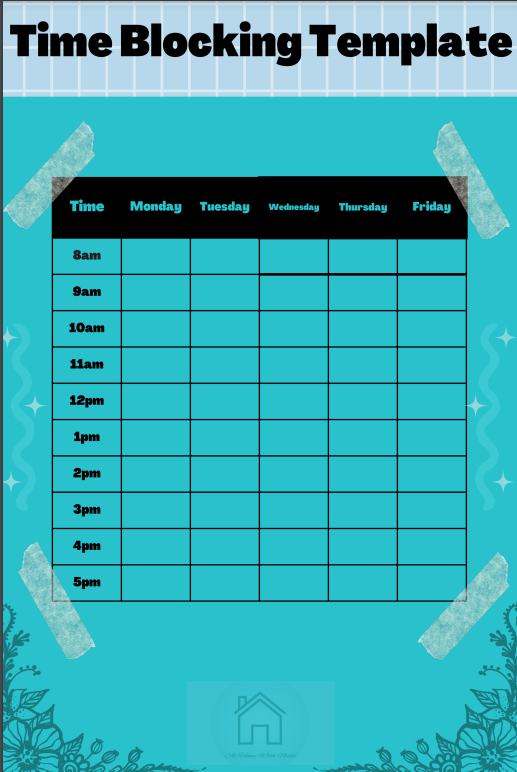
Time blocking is a technique where you “block out” hours to work on a certain task. For example, from 9 am to 10 am I’ll check my emails, respond to clients or professors, and review my list of tasks for the day. From 10 am to1 pm I will work on my first set of tasks. From 1 pm to 3 pm ill eat lunch and clean up my kitchen from breakfast and lunch. I’ll also give my dogs fresh food and water and let them outside. Then from 3 pm to 6 pm ill work on finishing my tasks for the day, and making a task list for the next day.
In my daily planner, I will have these times blocked out in different colors showing the different tasks dedicated to that block of time. This has been a game-changer when it comes to focusing my time on what I need to accomplish each day.
But this method alone was not enough to help me manage my time efficiently. Im not just a freelancer, im also a mom, a student, a homemaker, and a wife. There’s no amount of time blocking in the world to give me enough time for all of it in a single day. This is why I also use the day-theming method.
Day Theming
This method is a bit more obvious than time blocking. The day-theming method is focused on one task or group of tasks per day. The example I gave you above will be structured the same but instead of just saying 1st group of tasks, it may be a school assignment that im working on today.
So from 10 to 1, I might be working on adding a script to a mechanic in Unreal Engine and watching a lecture. And then from 3 to 6, I might be working on finishing the assigned reading for class, discussion posts, and writing out any questions or concerns I have while I’m working. The next day I may do the same for work-related tasks, or home-related tasks.
These two methods combined with task batching give me the ultimate control over my day.
Task Batching
The easiest way I can describe task batching is by cooking. So say you’re going to make spaghetti:
- First, you’re going to put a pot of water on the stove to boil.
- While you’re waiting for it to boil you turn the stove on to preheat while you’re making your sauce.
- While your sauce is simmering you add your noodles to cook, and then get your garlic bread ready to go in the oven.
- Once the noodles are al dente you use the tongs or a pasta spoon to move them over into the sauce and mix them up.
- By then the garlic bread is done, and dinner is ready.
Notice how you’re working on several tasks at a time but everything is flowing together smoothly? That’s task batching, putting related tasks together to increase efficiency.
On my working themed days, I will prioritize finishing any articles I had already started, revisions, and dealing with editor feedback from the content mill first. Then ill move on to reaching out to potential clients and pitching, while im working on strengthening my portfolio. Then I check any invoices I may have pending, and make out invoices for recently completed articles.
Working on similar tasks together helps you focus better and helps you accomplish more in a small amount of time. But you still need a way to keep everything organized and be able to see everything you need to accomplish at once.
Master Calendars
At the beginning of each month, my professors post when there will be lectures, when assignments will open, and when they will be due. I transfer all of this information into a monthly calendar as well as any projects I have for my blog and business.
I also put any doctor’s appointments, play dates, birthdays, and outside tasks that need attention. Then I use that as a base to plan out my week for school, housework, and freelancing. This Gives me something I can quickly look at and determine how much time I’ll have on any given day, in order to schedule other things.
This also helps me keep my daily time blocking organized, and helps me make sure I’m working on the right tasks at the right time. That way I’m not rushing to finish a project that I forgot about because I was too focused on a less important task.
Murphy’s Law
Ever heard of Murphys Law? It’s basically “anything that can go wrong will”. This is why it’s important to “hope for the best but prepare for the worst”.
These methods can help you minimize or even potentially avoid the majority of those unfortunate moments. But things do still happen that are completely out of your control. Your child will get sick, you will get sick, and family emergencies may come up.
These are the times when communication is important. Be sure to communicate that you are having issues, you dont have to go too much into detail if you dont want to. But be sure to communicate how much extra time you’ll need to complete your projects. Then be sure to keep the new arrangement.
Time-Management for Personal Care
While these methods are great for keeping helping with time management for freelancing. There is one more critical component to make it all work. That component is taking the time to care for yourself and your needs. Otherwise, you risk burning yourself out and from personal experience, it can be hard to bounce back from when you’ve been neglecting your needs.
That’s why for my next post I’ll be talking about the importance of taking the time to care for your own needs. So be sure to sign up for my email list, and follow my Facebook page to know exactly when it’s released.
Dont forget to share this post on social media with someone you think could use some of these methods. And remember, you’ve got this!
 At Home With Nicole